
Defeating Chinch Bugs: A Florida Homeowner’s Guide
Spotting & Stopping These Sneaky Yard Pests
Your grass may look fine at first glance, but danger could be hiding right under your feet. Chinch bugs are tiny but destructive pests that might be silently attacking your lawn while you’re none the wiser.
These mini menaces are especially troublesome in Central Florida, where they love to chow down on St. Augustine grass. They drain the life from your turf, leaving behind growing brown patches that ruin your yard’s appearance.
Have you seen mysterious yellow or dead spots that don’t improve with watering? Chinch bugs could be to blame. Read on to learn:
- How to recognize chinch bugs
- Warning signs of an infestation
- Best ways to keep them away
- How to fight back if they strike
Meet the Chinch Bug
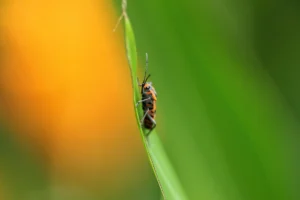
Don’t let their size fool you! Chinch bugs may be small, but they pack a punch. Measuring just 1/5-inch long, they’re easy to miss…until the damage is done. Then it’s obvious that something has been ruining your yard.
These pests attack by piercing grass blades and draining their sap, all while releasing a toxin that blocks water absorption. This one-two punch causes grass to wither and die at an alarming rate.
Fast facts about chinch bugs:
- Size: Barely bigger than a pinhead
- Appearance: Black with white wings and nymphs that are reddish with a white band
- Reproduction: Females lay 200+ eggs starting in spring
- Peak Season: Most active from May through August
While they prefer hot, dry conditions, even well-maintained lawns in Central Florida aren’t completely safe from their assault.
Is Your Lawn Under Attack?
Chinch bug damage often gets mistaken for drought or disease. Here are five ways to know for sure if they’re the real culprits:
- Spreading Dead Zones
Grass turns yellow, then brown, before dying in irregular patches. Damage typically begins near pavement edges or sunny spots.
- No Revival After Watering
Drought-stressed grass bounces back with water. However, chinch bug damage doesn’t.
- The Simple Can Test
Remove both ends of a large tin can. Coffee and soup cans work well. Press it into the soil at a damaged area’s border. Then fill with water. If bugs are present, they’ll float up within minutes.
- A Distinctive Stench
Crushed chinch bugs release a strong, unpleasant odor. Walk across your yard and see if you anything smells “off.”
- Close-Up Inspection
Separate grass near the affected areas. Look for tiny, quick-moving insects in the thatch. You may need a magnifying glass.
Tips for Keeping Chinch Bugs Away
Stopping an infestation is easier than curing one. Make your lawn less inviting with these strategies:
Healthy Lawn Habits
- Mow Smart: Maintain grass at 3–4 inches for stronger roots.
- Water Wisely: Deep, weekly soakings beat frequent light sprinklings.
- Dethatch Often: Thatch thicker than 0.5 inches becomes a bug haven.
- Fertilize Carefully: Excess nitrogen attracts more pests.
- Encourage Helpers: Welcome bug-eating allies like ladybugs and ground beetles.
Avoid These Common Errors
- Drowning your lawn (encourages fungus).
- Cutting grass too short (weakens its defenses).
- Using harsh pesticides (kills helpful insects too).
How to Eliminate Chinch Bugs ASAP
Found an infestation? Move quickly! These pests multiply fast, so here are three options to take.
- Gentle Yet Effective Solutions
- Neem Oil: Disrupts growth cycles (apply at dawn/dusk).
- Soap Sprays: Kills nymphs on contact.
- Diatomaceous Earth: A natural, dehydrating powder.
- Stronger Chemical Defenses
- Bifenthrin or Cyfluthrin: Effective against severe infestations.
- Treat at dawn when bugs are most active.
- Always follow instructions to protect pollinators.
- Calling in the Pros
When DIY isn’t enough, professional lawn care services in Florida, like Dr. Jack’s, provide:
- Precise infestation assessments
- Specialized treatments
- Ongoing prevention strategies
Dr. Jack’s proudly offers lawn care services to the following areas in Central Florida:
- Altamonte Springs
- Apopka
- Belle Isle
- Casselberry
- Chuluota
- Clermont
- Edgewood
- Fern Park
- Geneva
- Gotha
- Heathrow
- Lake Mary
- Longwood
- Maitland
- Ocoee
- Orlando
- Oviedo
- Sanford
- Windermere
- Winter Park
- Winter Springs
Don’t Let the Bugs Keep Bugging You!
Though small, chinch bugs can cause major lawn devastation to Central Florida lawns. Early detection and smart prevention are your best bets.
Think chinch bugs are hurting your turf? Contact Dr. Jack’s as soon as you can! We’ll tailor an application plan to banish the lawn bugs once and for all.