
Details & Tips for Central Florida Homeowners Who May Have Termites
One of the biggest risks to Florida homes is termites, which inflict billions of dollars’ worth of damage every year throughout the state. Long before homeowners see any symptoms, structural integrity may be jeopardized by these silent destroyers.
Want to get rid of termites permanently? Get in touch with Dr. Jack’s! If you have a small issue or a giant colony you’ve discovered, we’ll help you learn how to spot, stop, and prevent termites in Florida for good. Keep reading to learn more! We’re covering everything you need to know about detecting, managing, and getting rid of termites in Central Florida’s particular climate.
How to Determine If You Have Termites
Key Signs to Look For
Although they are difficult to locate, termites leave behind noticeable signs if you know where to look.
Mud tubes
Search for slender dirt tunnels on foundations or walls. These are used by termites to move from their nest to the wood in your house.
Discarded wings
After locating a new nesting location, flying termites shed their wings. These near windows are a sign of trouble.
Wood that’s hollow
Tape your baseboards or walls. Termites may be consuming the wood if they make an empty sound inside.
Termite excrement
Tiny wood-colored pellets that resemble sawdust piles are left behind by hardwood termites.
Sticking windows or doors
Doors and windows won’t open smoothly if termite damage causes the frames to warp.
Learn More About Four Kinds of Termites
Florida’s warm, humid climate creates ideal conditions for multiple termite species to thrive year-round. The state faces some particularly destructive types:
Subterranean Termites
- Most common and destructive species
- Build underground colonies with up to 2 million members
- Can consume 1 foot of 2×4 wood in just 5 months
- Active in all Florida counties
Drywood Termites
- Don’t need to come into contact with soil
- Typical in coastal areas
- Frequently infest homes’ upper floors and attics.
Dampwood Termites
- Live in moist or decaying wood
- Found in the Pacific Northwest and humid zones like Florida
- Often in old stumps or leaky sheds
Formosan Termites
- “Super termites” with enormous colonies
- Consume wood faster than native species
What makes it difficult to get rid of termites in Florida?
- High humidity
- A lot of rain that causes issues with moisture
- Older housing stock that is built of wood
- Being close to termite natural habitats
How Do You Get Rid of Florida Termites?
DIY Termite Treatments (For Early/Minor Activity)
Termiticide foam kills termites instantly by expanding to fill their tunnels. To apply the foam directly into exposed mud tubes or infested wood, this technique calls for a specialized injection kit. It works well for small, localized infestations where you can easily reach the affected areas, but it isn’t appropriate for larger issues. Although the foam’s expanding action makes sure it gets deep into termite galleries, larger infestations might require professional treatment.
A more gradual method of termite control is provided by bait stations. Worker termites bring the poisoned wood from these plastic traps back to their colony. They can eventually eradicate an entire colony when positioned every 10 to 20 feet around the foundation of your house. However, this process takes several months to complete, making bait stations better suited for prevention and long-term control rather than immediate results. The stations need regular monitoring and maintenance to remain effective.
A liquid termiticide barrier creates a protective chemical zone when applied to soil around your foundation. This treatment serves two purposes: it kills termites on contact and blocks their access to moisture sources in the soil. Proper application is crucial. The termiticide must be mixed correctly and distributed evenly to form an uninterrupted barrier. While highly effective against subterranean termites, this method requires precise measurement and application for optimal protection.
Nematodes provide a natural alternative for termite control. These microscopic worms actively seek out and kill termites in moist, infested areas. While environmentally friendly and safe for plants and pets, nematodes work best when combined with other treatments.They can help reduce termite numbers, but typically can’t eliminate large infestations on their own. For best results, apply them in damp soil where termite activity is present.
Orange oil and boric acid provide two distinct methods for spot treatments. While orange oil kills upon contact through direct application, boric acid acts as a stomach poison when termites consume it. Orange oil can be injected into infected wood, or boric acid powder can be sprinkled on susceptible areas. These techniques may work well for minor, obvious infestations, but they are insufficient to deal with large colonies that are underground or concealed behind walls. They work best for early-stage issues or as a component of an all-encompassing treatment plan.
Why Is DIY Alone Not Usually Effective?
Termite colonies can contain thousands to millions of hidden members, depending on the number of nesting sites. DIY treatments typically ignore the main colony and only target surface-level activity.
Inappropriate application can spread termites, worsening the infestation. If you don’t use professional-grade products and techniques, you’re usually just treating the symptoms rather than fixing the problem.
5 Professional Termite Treatment Options Explained
- Thorough Inspections
- Heat signatures are detected by thermal imaging cameras
- High-risk areas are identified by moisture meters
- Borescopes look inside cavities in walls
- Acoustic detectors keep an ear out for colony activity
- Sophisticated Bait Systems
- Insect growth regulators at in-ground stations
- Units above ground for active infestations
- Technology for remote monitoring
- Applications of Liquid Termiticide
- Formulas that are non-repellent (termites cannot detect)
- Pretreatment of the soil for new construction
- Injections of foam for slab penetration
- Fumigation of Structures
- Treatment with sulfuryl fluoride
- 24-72-hour procedure
- Full structure tenting
- Options for Wood Treatment
- Borate solutions for framing that is exposed
- For localized drywood infestations, use orange oil.
- Targeted microwave treatments
When to Call a Professional
If you see any termite warning signs, you should contact a professional exterminator right away. Don’t wait! The longer termites are active in your house, the more extensive and expensive the damage will be.
Seeing active swarmers, or flying termites, is a big warning sign that the infestation has progressed to a serious level and that there’s already an established colony nearby.
Termites have probably been feeding for months or even years if you notice obvious structural damage like drooping ceilings, buckling wood floors, or crumbling drywall.
Termites may have become too big or resistant for amateur methods to manage if you’ve tried do-it-yourself treatments and they continue to return, or if store-bought products aren’t working.
In these cases, professional intervention becomes essential to properly eliminate the infestation before it causes irreversible harm to your home’s structure.
Here’s why you should call a professional:
Special tools you can’t get
- Advanced bait systems (like Sentricon)
- Commercial-strength termiticides
Proper barrier treatments
- Protection for the entire perimeter
- Correct chemical application
Colony elimination
- Finds and destroys the main nest
- Stops future infestations from happening
How to Prevent Termites With Long-Term Solutions
Here are some of the most impactful termite prevention tips available that you can do yourself.
Control Any Moisture
- Repair leaks in faucets, roofs, and pipes right away.
- Improve the drainage around the foundation of your house by sloping the soil away from it.
- Gutter cleaning should be done frequently to avoid water accumulation.
- In moist crawl spaces and basements, use dehumidifiers.
- Make sure the attics and underfloors have adequate ventilation.
Limit Wood-to-Soil Contact
- Keep mulch, lumber, and firewood at least two inches from the foundation of your house.
- Use metal racks or concrete blocks instead of placing wood directly on the ground.
- Tree branches and shrubs should be trimmed to avoid touching the house.
- Use gravel or rubber substitutes in place of wood mulch close to foundations.
Seal Any Entry Points
- Examine exterior walls for loose siding, gaps around pipes, and foundation cracks.
- Use caulk or weatherstripping to seal the openings around windows, doors, and utility lines.
- Repair damaged roof shingles and vents to prevent moisture buildup.
Maintain Your Property
- Clear your yard of old wooden debris, dead trees, and stumps.
- Paper, cardboard, and other cellulose products should be kept in airtight plastic containers rather than on the ground.
- Compost piles should be kept away from homes.
Schedule Regular Inspections for Termites
- Once a year, or more frequently in high-risk areas, have a professional inspection.
- Look for mud tubes, frass, or hollow wood since early detection saves thousands on repairs.
Regional & Seasonal Considerations
Termites are most active in the spring and fall, when warm, humid weather causes swarms to form. Winter or late summer are the best times to avoid these peak seasons.
Where you live affects your risk. In the hot, humid South, aggressive subterranean and Formosan termites proliferate rapidly. Because dampwood termites, which consume wood that has been soaked by water, are prevalent in coastal and rainy areas, controlling moisture is crucial.
Drywood termites thrive in arid regions like the Southwest. They can nest in wood and attics without coming into contact with soil.
If you are aware of the risks in your area, you can plan for treatments and inspections for the best protection.
FAQs About Termite Control in Florida
Do termites bite humans?
No. They only eat wood and cellulose. Despite having strong jaws for gnawing through wood, they aren’t aggressive toward people or pets.
Can you get rid of termites permanently?
Professional solutions (such as liquid barriers and bait systems) can eradicate active colonies and offer long-term protection, but no treatment can guarantee termites won’t return. Regular inspections help identify new infestations early.
How long do termite treatments last?
Liquid termiticides last for several years, annual inspections help maintain protection, bait stations require regular monitoring and replacement, and fumigation (tenting) is a one-time treatment that doesn’t prevent future infestations.
What makes your house appealing to termites?
They may be drawn to cellulose materials (paper, cardboard, and wood debris near the house), wood-to-soil contact (wood, mulch, and deck posts touching the ground), moisture (poor drainage, leaky pipes), and foundation cracks.
What does a termite look like?
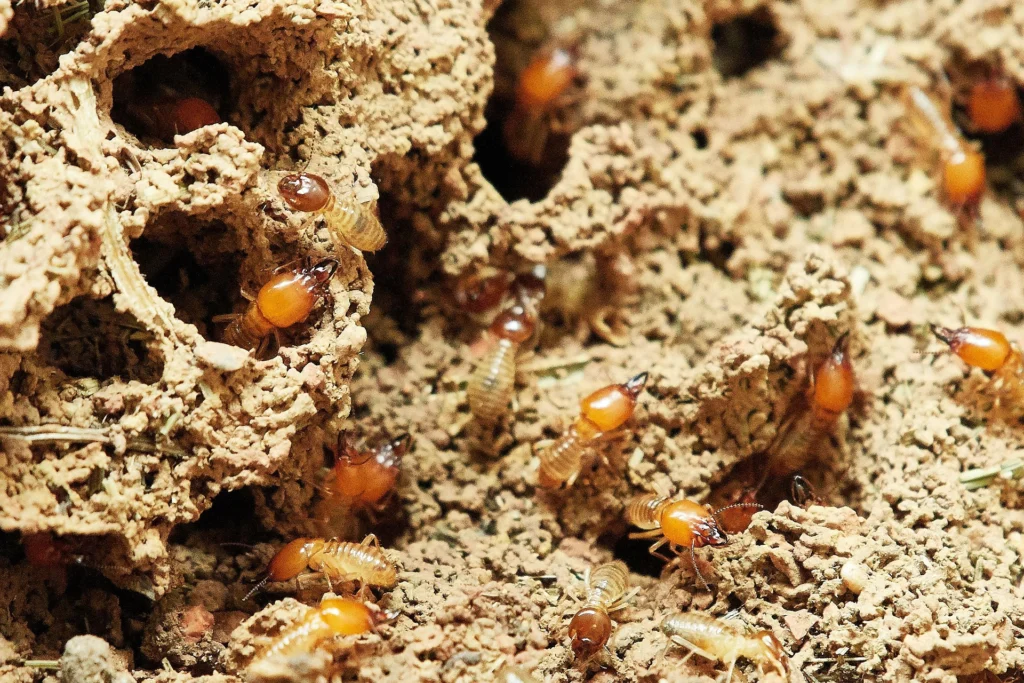
- Workers: Small (¼ inch), soft-bodied, creamy-white
- Swarmers (winged termites): Dark brown/black, ½ inch long, two equal-length wings
- Soldiers: Larger heads with pincers, pale yellow-brown
Call the Pros to Get Rid of Termites!
Professional assistance is crucial if you notice any structural damage, active swarmers, or mud tubes. The same is true if termite activity cannot be stopped by do-it-yourself methods. Because termites are always a threat to ruin your house.
Not sure how you get rid of termites permanently? Reach out to Dr. Jack’s today! We proudly offer lawn care services to the following areas in Central Florida:
- Altamonte Springs
- Apopka
- Belle Isle
- Casselberry
- Chuluota
- Clermont
- Edgewood
- Fern Park
- Geneva
- Gotha
- Heathrow
- Lake Mary
- Longwood
- Maitland
- Ocoee
- Orlando
- Oviedo
- Sanford
- Windermere
- Winter Park
- Winter Springs