
Learn About the Crazy Life, Anatomy & Preferences of Mayflies
Central Florida homeowners have probably seen a mayfly emergence…and the nasty results of it. Sure, mayflies are harmless. They can’t bite, they can’t sting, and they don’t transmit disease. But they can definitely be annoying.
The pest control team at Dr. Jack’s is breaking down everything worth knowing about mayflies in Florida. That includes their life cycle, what draws them to your property, how you can manage them, and when you should call us.
What Is a Mayfly?
Despite the name, mayflies are more closely related to dragonflies than to houseflies or mosquitoes. And they’re ecologically important since mayflies are a main food source for fish, birds, and bats.
Plus, biologists treat their populations as a genuine indicator of good water quality. So the annoying swarm on your back patio carries a reassuring message about the water in your area.
What Do They Look Like?
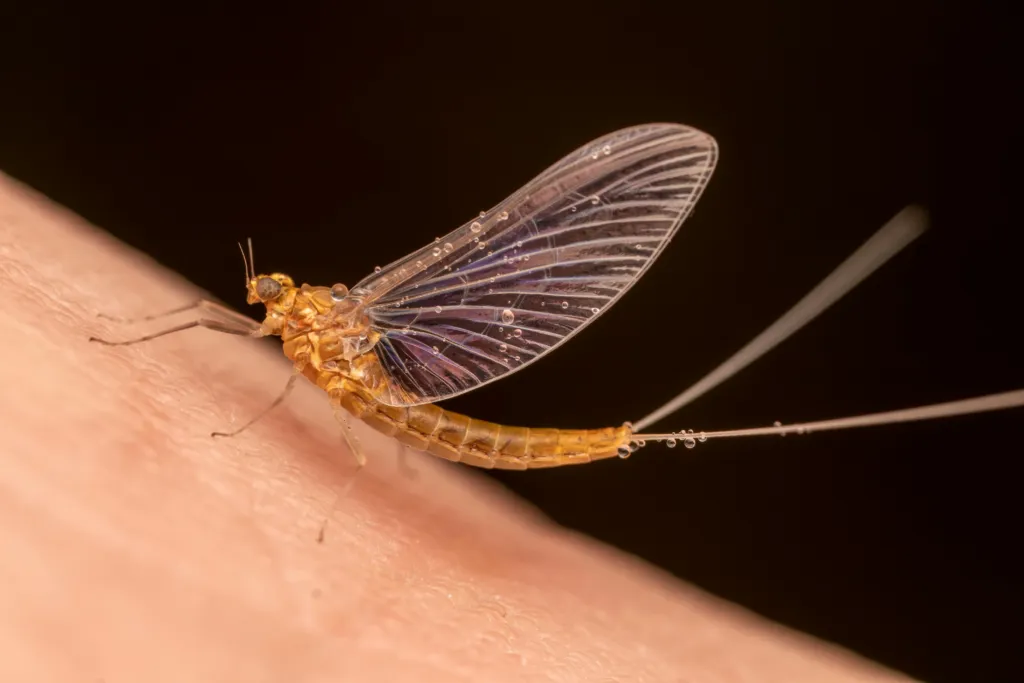
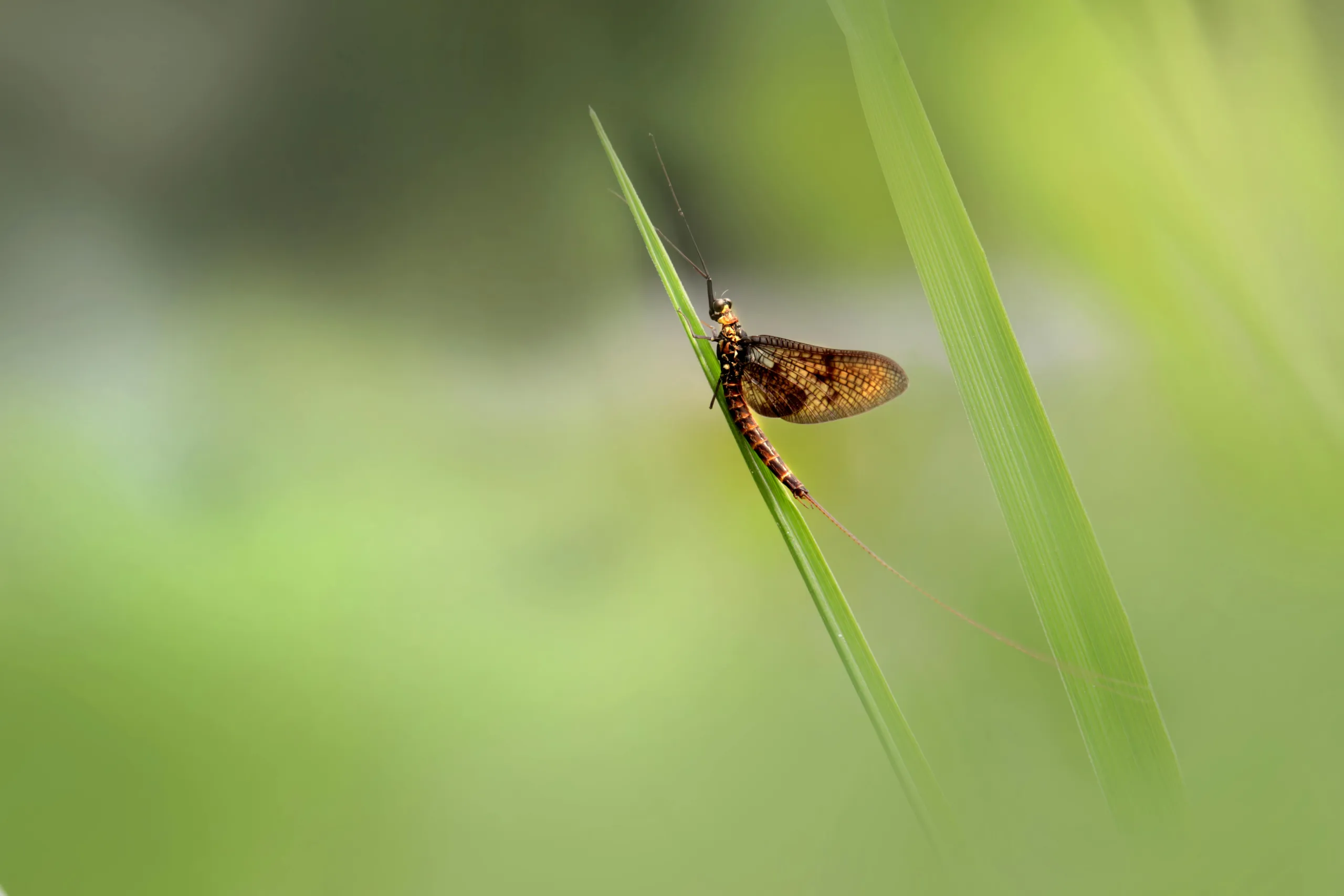
The upright wing posture is the first thing to notice. Where most insects fold their wings flat against the body when resting, mayflies hold theirs angled sharply upward. Paired with two or three delicate thread-like filaments extending from the tail end of the abdomen, it’s a silhouette that’s unique.
Body size runs from about a quarter inch to just over an inch in length. The abdomen is slender and tapered. The compound eyes are disproportionately large for the head.
Comparing to lookalikes:
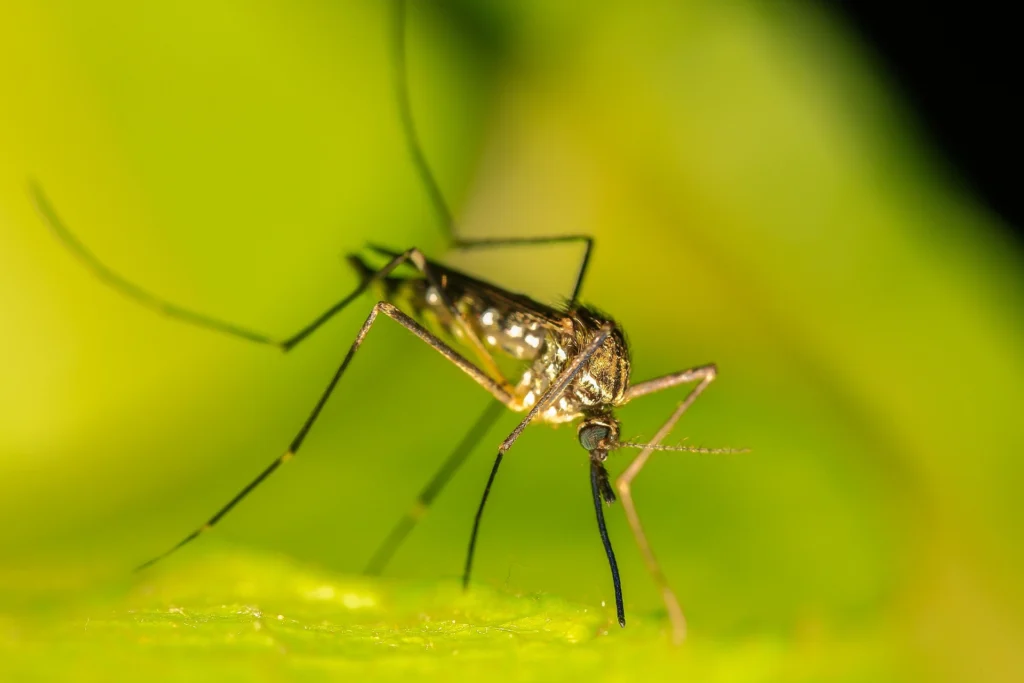
Mosquitoes are the most frequent source of confusion. The biggest difference? Mosquitoes have a narrow, needle-like mouthpart for piercing skin. Mayflies have no functional mouthparts at all.
Crane flies are larger than mayflies, their wings spread horizontally at rest, and they lack the trailing tail filaments entirely. They’re also harmless to people, though their larvae occasionally affect grass roots.
Midges are the important lookalike to sort out. Small, abundant near water, and frequently present at the same time as mayflies, certain midge species bite. If you’ve been walking through what looks like a mayfly swarm and coming away with bites, midges are probably responsible.
How Long Do Mayflies Live?
The aquatic nymph stage, which is spent entirely underwater, lasts anywhere from a few months to two full years. During this period, nymphs burrow into sediment and feed on algae, decaying plant material, and organic debris. This is the overwhelming majority of a mayfly’s life.
The adult stage, which is the part Florida homeowners actually witness, lasts between 12 and 48 hours for most species. For the vast majority of Florida mayflies, the clock starts running the moment they leave the water. There’s no feeding, no sleeping, and no pausing. The entire adult existence is biologically directed toward reproduction.
So the full answer to “How long do mayflies live?” is that they live years. But it’s mostly out of sight, underwater.
The Life Cycle Behind the Swarm
When water temperatures and weather conditions hit the right combination of warm, still evenings in late spring or early summer, thousands of nymphs don’t emerge. In a giant, synchronized swarm.
A single female deposits between 500 and 8,000 eggs before she dies. Those eggs settle to the bottom and launch the cycle over again.
The sheer drama of a mayfly swarm comes entirely from that emergence at the same time. When an entire nymph population surfaces over one or two evenings, the result is a sudden, concentrated explosion of insects.
Add Florida’s warm temperatures, calm air, and a nearby light source, and you have exactly the conditions that cause homeowners to call us.
What Draws Mayflies to Your Property?
Proximity to freshwater. Properties within roughly a mile of a lake, river, pond, or stream during emergence season are directly in the path of any local swarm.
Outdoor lighting. Mayflies navigate using moonlight and starlight. Artificial lighting disrupts that system, drawing insects toward the source from a significant distance. Bright white and blue-spectrum bulbs are the most effective attractants. Warm amber and yellow LED alternatives are considerably less appealing to insects in general.
Reflective surfaces. Mayflies appear to register certain reflected light patterns as open water. This could be a glossy car hood, a swimming pool with overhead lighting, or polished siding.
Weather conditions. Still air and mild temperatures are what trigger large-scale emergence events. Florida’s spring evenings regularly deliver exactly that combination, which is part of why the state sees regular, substantial hatches.
Do Mayflies Bite or Sting?
Not at all! Adult mayflies are incapable of biting or stinging. Their mouthparts serve no biological function, and their digestive systems are filled with air rather than anything designed to process food.
If you’ve experienced what felt like bites during a swarm, something else in that swarm was responsible. Mosquitoes and midges commonly emerge under identical conditions and share the same airspace. In a dense, disorienting cloud of insects, blaming the most visible species is an understandable mistake. But the mayfly isn’t the culprit.
Disease transmission is also off the table. Mayflies carry no pathogens. Their impact on human health is zero.
Can Mayflies Damage Your Property?
Dead mayflies build up fast. And their decomposing carcasses create an unpleasant odor. Thick accumulations on pavement, porch steps, or walkways also become slip hazards. Let the buildup sit too long and you’ll attract birds and bats moving in to feed on the remains, which introduces a separate set of complications.
Adult mayflies cause zero damage to turf, plants, or garden beds at any point in their development. Their nymph stage is also entirely aquatic, so your lawn is completely safe.
When Is Mayfly Season in Florida?
Florida’s warm climate pushes the mayfly season earlier than most of the country. Florida and the Gulf Coast typically see emergence beginning in April and peaking through May.
Evening conditions are the week-to-week trigger. Still, mild air gets nymphs moving toward the surface.
Year-to-year variation in swarm size is normal and driven by a combination of factors: winter temperatures, nymph survival rates through the colder months, water quality during the developmental period, and weather patterns in the weeks leading up to emergence.
A mild winter followed by a warm, wet spring tends to set up conditions for an especially large hatch.
What to Do When Mayflies Show Up
The breeding source (nymphs in lakes, rivers, and ponds) is completely out of reach of any residential treatment. The practical strategy is reducing how many end up on your property and managing the cleanup when they do.
Lighting adjustments are the highest-impact change most homeowners can make. Transition from bright white outdoor bulbs to warm amber or yellow LED alternatives. Add motion-sensor controls so lights aren’t running all night. Angle fixtures downward to reduce how far light disperses.
Clean up quickly. Once a swarm passes, use a broom, shop vacuum, or garden hose to handle the bulk of the dead mayflies efficiently. Getting ahead of decomposition keeps odor manageable and eliminates the slip hazard before it builds into something more serious.
Small adjustments around the house also help. Check window and door screens for gaps or tears before spring arrives. Close curtains or blinds on windows adjacent to exterior lights once the evening begins. Running a fan on a patio or deck creates enough airflow to discourage mayflies, which are weak fliers.
What about insecticides? They’re rarely worth it in a residential context. The adult lifespan is so brief that most products don’t have time to produce meaningful results before the swarm ends on its own. Applying pesticides near water also carries environmental concerns that aren’t justified by the outcome against an insect that poses no real threat.
When Should You Call Dr. Jack’s?
Most mayfly swarms in Florida resolve within a few days without professional intervention. The combination of lighting adjustments and prompt cleanup handles the majority of residential situations.
However, there are circumstances where professional help is the right call. If severe swarms are returning year after year and significantly affecting how you use your outdoor spaces despite consistent management efforts, a professional assessment can identify contributing factors you may not have addressed.
Commercial properties where insect accumulation creates documented safety hazards on walkways or building entrances benefit from professional evaluation. And if there’s genuine uncertainty about whether the insects causing problems are harmless mayflies or biting, disease-carrying mosquitoes, correct identification changes the entire management approach.
Reach out to Dr. Jack’s today for professional care that works! We proudly offer lawn care and pest control services to the following areas in Central Florida:
- Altamonte Springs
- Apopka
- Belle Isle
- Casselberry
- Chuluota
- Clermont
- Edgewood
- Fern Park
- Geneva
- Gotha
- Heathrow
- Lake Mary
- Longwood
- Maitland
- Ocoee
- Orlando
- Oviedo
- Sanford
- Windermere
- Winter Park
- Winter Springs